Vagaro Analytics for Barbershops: 7 Numbers Every Owner Should Track
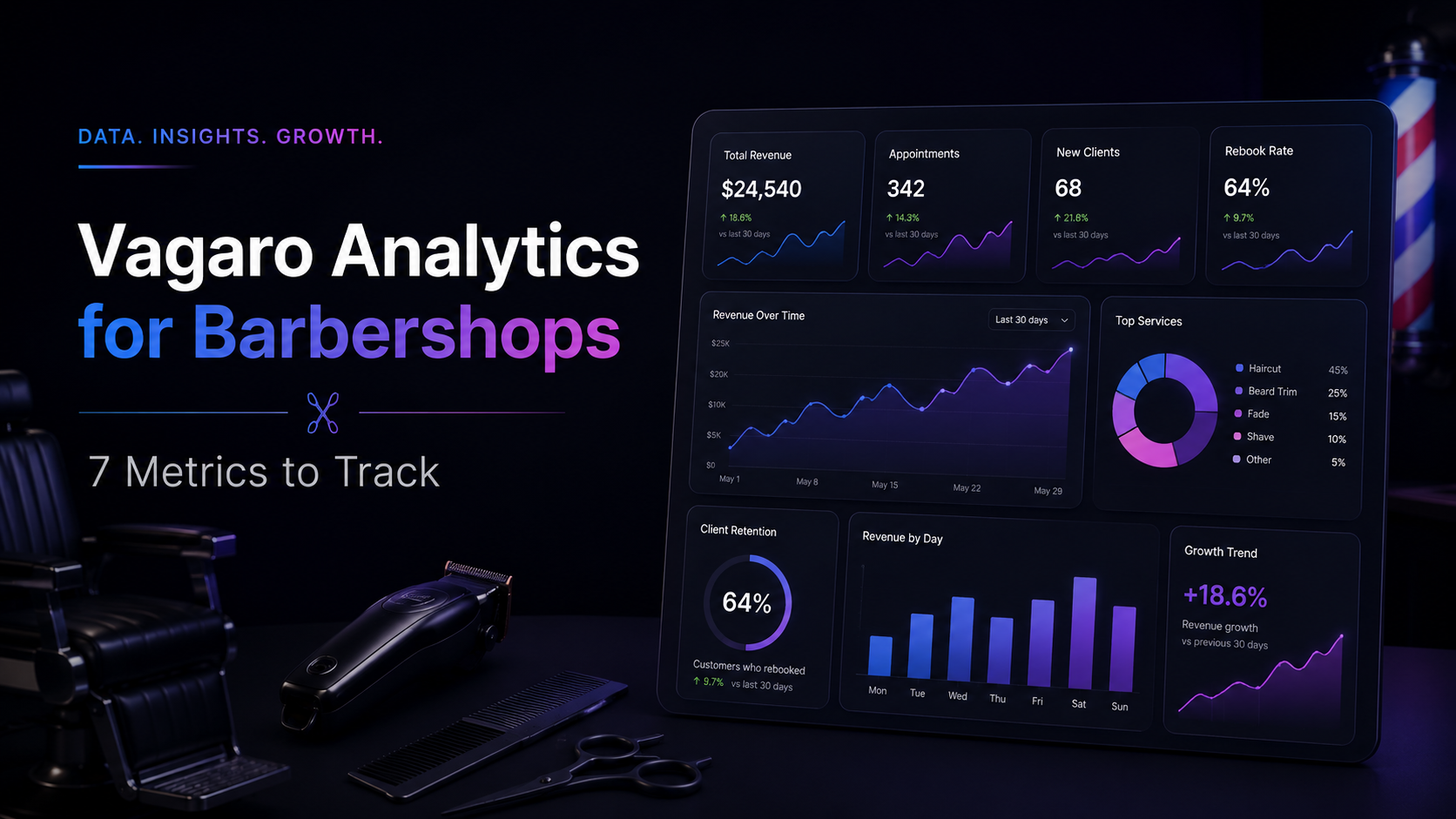
Vagaro Analytics for Barbershops: 7 Numbers Every Owner Should Track
Running a busy barbershop does not automatically mean you are running a growing barbershop.
Your calendar may look full. Revenue may be coming in. Your barbers may appear busy. But unless you know why clients return, where new clients come from, and how each barber is performing over time, you are still making decisions with incomplete information.
Vagaro collects a significant amount of business data. The challenge is knowing which numbers actually matter and what actions to take after reading them.
Here are seven numbers every barbershop owner should track.
1. Total Barbershop Revenue
Explain:
- Weekly, monthly and yearly revenue
- Why isolated daily sales can be misleading
- Comparing equivalent date ranges
- Separating service, retail and other revenue
2. Revenue per Barber
Explain:
- How much each barber produces
- Why revenue alone does not tell the complete story
- Hours worked, pricing and appointment length
- Comparing barbers fairly
Formula:
Revenue per barber = Total service revenue generated by the barber during the period
3. New Clients
Explain:
- Why new-client volume matters
- Acquisition sources
- Google, referrals, social media and marketplace bookings
- Why more leads do not always mean better growth
4. Returning-Client Rate
Explain:
- Difference between new and returning customers
- Why returning clients create stability
- How a barber can appear busy while losing clients
- Tracking trends over several months
5. Client Retention
Explain:
- Retention is not simply total returning clients
- Cohort-based thinking
- Measuring whether first-time clients return
- Differences between shop retention and individual-barber retention
Basic formula:
Client retention rate = Returning eligible clients ÷ Total eligible clients × 100
6. Average Ticket
Explain:
- Revenue per completed visit
- Effect of pricing, beard services, products and upgrades
- Why average ticket should not be increased at the expense of retention
Formula:
Average ticket = Total collected revenue ÷ Completed appointments
7. Barber Capacity and Schedule Utilization
Explain:
- Available appointment hours versus booked hours
- Empty space hidden inside a seemingly busy schedule
- Late arrivals, blocked time and inconsistent schedules
- Why consistent availability supports client growth
Formula:
Schedule utilization = Booked service time ÷ Available service time × 100
What Vagaro Reports Can Show You
Discuss:
- Dashboard reports
- Sales trends
- New versus returning customers
- Employee and service performance
- Future projected sales
Clarify that reports provide the information, but owners still need a repeatable system for interpreting it.
Where Raw Reports Fall Short
Discuss:
- Too many individual reports
- Numbers viewed without context
- Difficulty seeing relationships between acquisition, retention and capacity
- Knowing what happened without knowing what to fix
Turning Vagaro Data Into a Weekly Growth System
Provide a simple weekly review:
- Check total revenue.
- Compare new and returning clients.
- Review each barber’s production.
- Identify unused schedule capacity.
- Review first-time-client return behavior.
- Choose one action for the next seven days.
Final Thoughts
Vagaro can tell you what happened inside your barbershop. The real advantage comes from connecting those numbers and turning them into decisions.
StudioSynq helps barbers and barbershop owners understand their performance, identify growth opportunities, and focus on the numbers that move the business forward.
Ready to know your numbers?
StudioSynq turns your Vagaro data into clear dashboards and smart recommendations.
Get Started Free